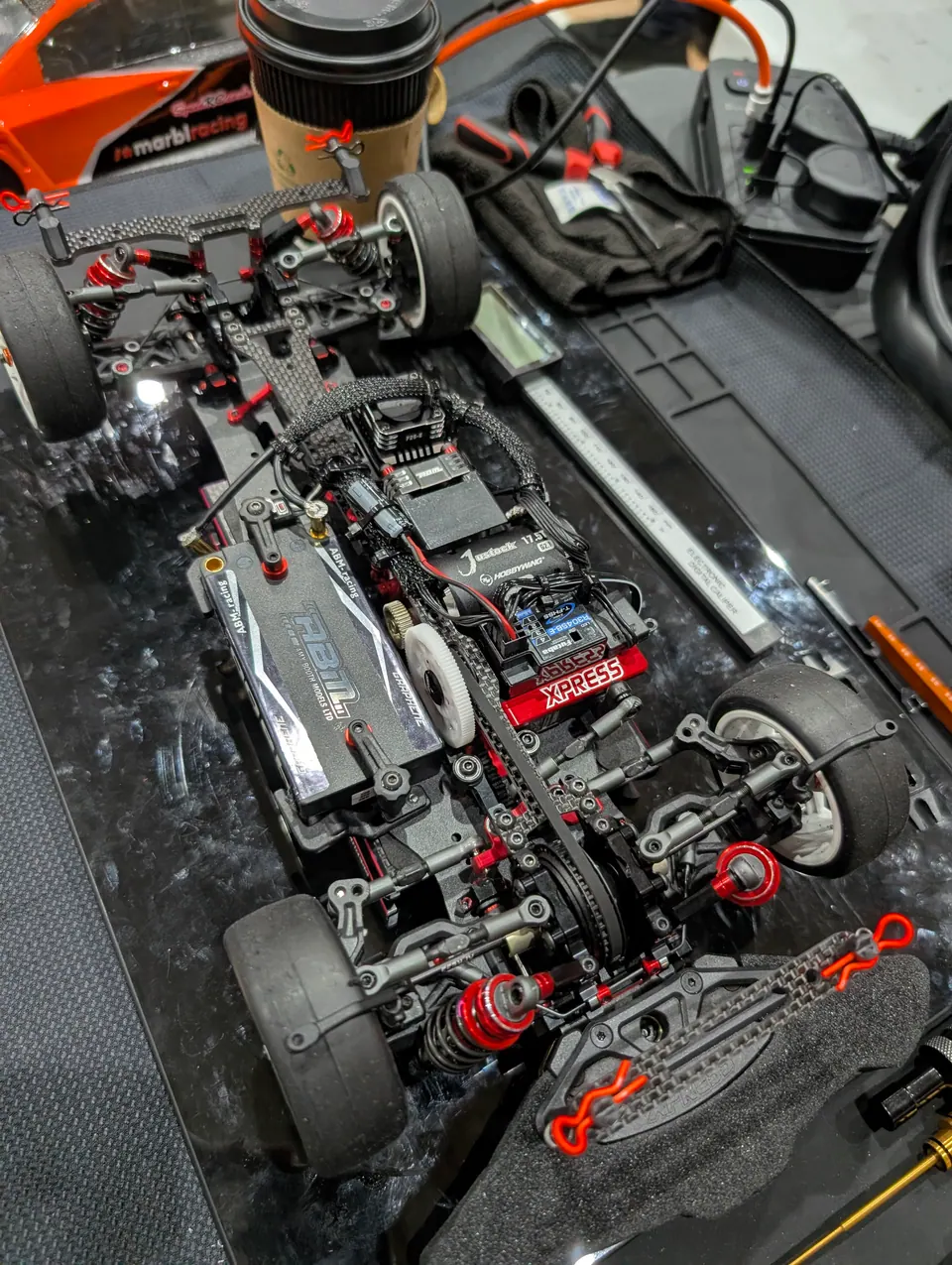
It was Friday 2 October. RugRacers Round 1 at Hertford was on the Sunday, and my new Xpress Execute MF1 was still in its box. This video is what happened next: a 1/10th front-wheel drive touring car, a “fronty”, taken from the box to a rolling, running car in a day.
 Play Building the Xpress Execute MF1 in one day, 49 minutes (YouTube video)
What’s in the video
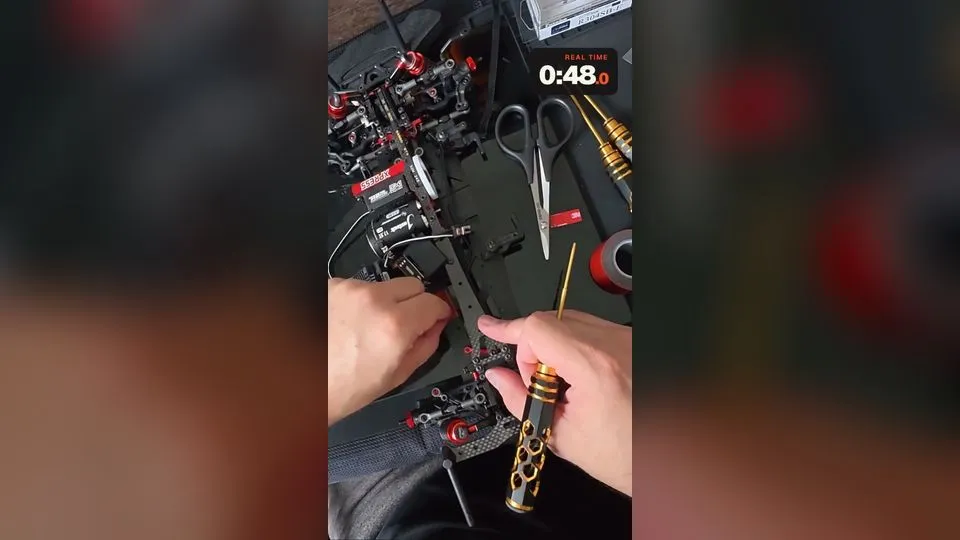
The chassis build is a timelapse. I started around lunchtime and stopped at about two in the morning. The morning after picks up with the shells masked and painted and the electrics still to go, and from there it slows down for the parts that matter if you’re building your first kit.
- Soldering the motor and ESC (5:34 and 23:07). A Hobbywing XR10 Justock ESC and its 17.5T motor: flux, pre-tinning, A to A, B to B, C to C, and why I don’t cut a single wire until the motor, the ESC and a battery are all sitting in the car.
- Mounting (11:40). Where the ESC, the receiver and the motor fan go, planning the cable runs, and the balance of the car around a low shorty pack. Plus the screws that didn’t fit, because that happens too.
- Battery wires (30:53). Cutting them to length with the pack in place, then soldering on the plugs.
- Flashing the ESC and pairing the radio (38:55). RugRacers limits the electronics, so the ESC gets the ETS18 firmware profile and the 17,500 RPM limit through Hobbywing’s OTA programmer on my phone. Then a new model on the transmitter and pairing it to the receiver, with one false start.
- Steering servo sub-trim (44:52). Getting the wheels pointing straight by eye, ready to fine-tune at the track.
In the middle (34:25) you’ll also see Marbl Pit Crew handing me the day’s task list. There’s more on what Pit Crew is on its own page.
If you’re building your first kit
Give yourself a week, not a day. Watch the soldering, ESC and radio chapters properly, and if you know a better soldering temperature than mine, tell me in the YouTube comments.
And please: if you’re under 18, get an adult to help with the soldering. If you’re under 16, don’t do it on your own at all. That iron runs at 400 to 500°C.
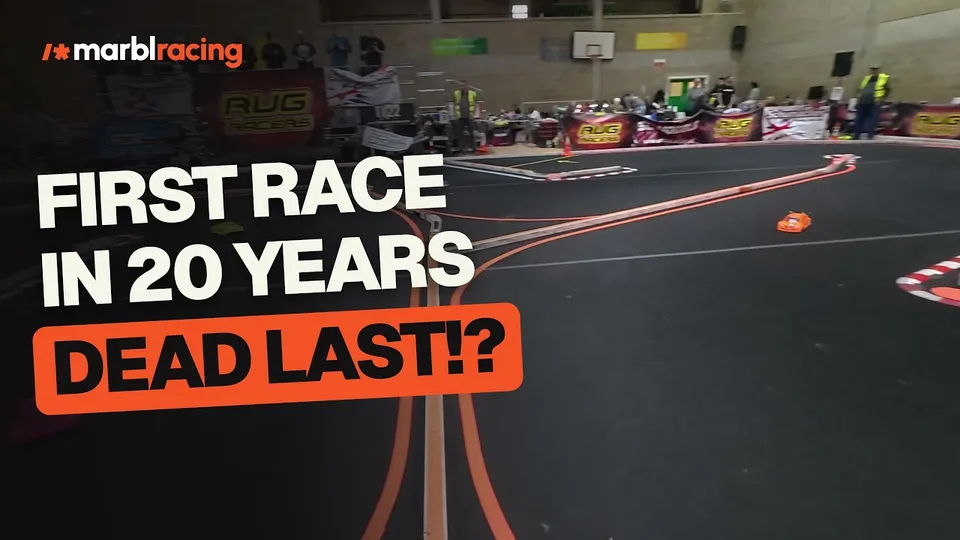
Watch the full build on YouTube (opens in a new tab), and subscribe to Marbl Racing (opens in a new tab) for the race-day videos. How the car got on at Hertford is in the RugRacers Round 1 report.